Home
About
Blog
Contact
Request Quote

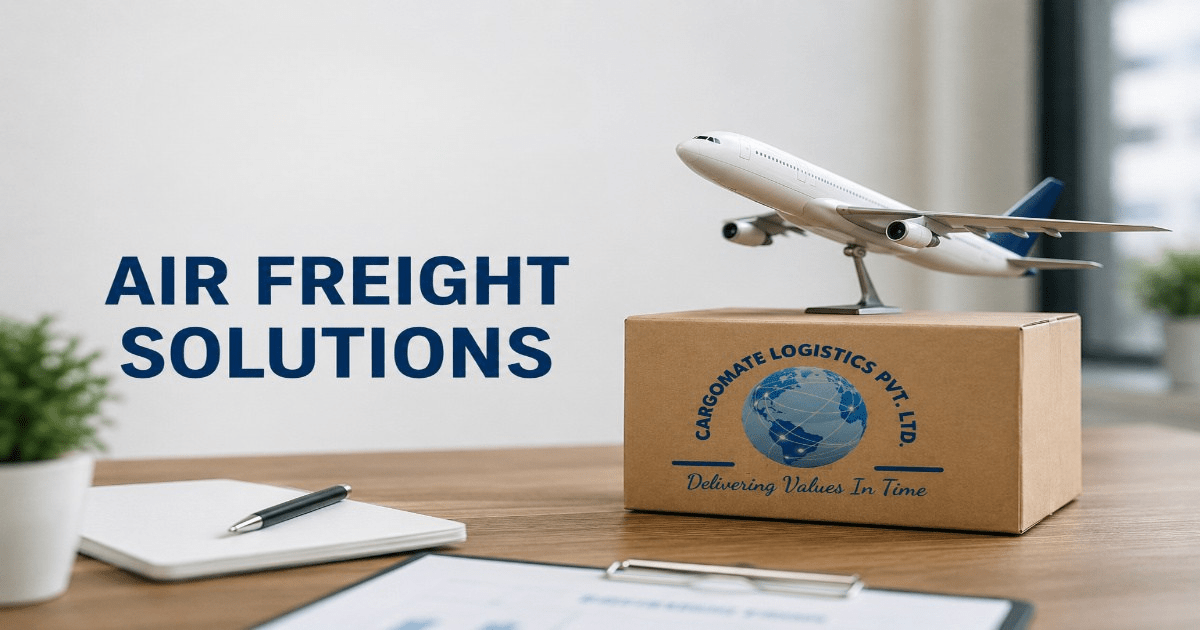
Imagine this: A manufacturer in Delhi has an urgent order for automotive components that must reach Germany within three days. The products are ready, but due to a delay in transportation, the shipment misses its connecting flight. The result? Production at the client’s factory comes to a halt, contractual penalties are imposed, and the business risks losing a long-term customer.
This isn’t just a hypothetical situation—it’s a reality many businesses face when logistics planning isn’t aligned with delivery expectations.
That’s why air logistics and cargo services have become an essential part of modern supply chains. Air freight enables businesses to move goods quickly across domestic and international markets while maintaining better shipment security and predictable delivery schedules.
This guide answers the most common questions businesses ask about air freight services in India, helping you make informed logistics decisions that support long-term growth.
If someone had asked this question ten years ago, the answer would probably have been simple: air freight was only for emergency shipments.
Businesses now operate in a market where delivery speed often determines customer satisfaction. Online retailers promise next-day delivery, manufacturers depend on just-in-time inventory, and exporters work with strict international deadlines. In many industries, waiting several weeks for sea freight simply isn’t practical.
Air logistics has evolved from being a premium shipping option to becoming a strategic business decision.
Here are a few reasons why more businesses are choosing air cargo services today:
Indian businesses are increasingly serving customers across North America, Europe, the Middle East, and Southeast Asia. Faster transportation allows exporters to meet international delivery commitments and strengthen relationships with overseas buyers.
Customers no longer compare your products only with local competitors—they compare your delivery experience with global brands. Businesses that can deliver quickly often gain a competitive advantage.
Some products simply cannot afford long transit times. Pharmaceuticals, medical equipment, electronic devices, fashion collections, and high-value industrial components often require faster transportation to maintain quality or meet market demand.
Faster deliveries allow businesses to reduce inventory costs and respond more quickly to changing customer requirements.
Instead of storing large quantities of stock, companies can replenish inventory more frequently through reliable air freight services.
One of the biggest concerns businesses have is cost.
At first glance, air freight is usually more expensive than sea or road transportation. That’s why many businesses immediately assume it’s not the best option.
However, transportation cost is only one part of the equation.
Imagine you’re exporting garments for a festive season. Saving money on shipping won’t help if the products arrive after the festival has ended.
Similarly, if a manufacturer is waiting for imported machine parts, even a week’s delay could stop production, resulting in losses that far exceed the additional cost of air transport.
Air freight is generally a smarter option when:
The right question isn’t “Which shipping method is cheaper?”
It’s “Which shipping method creates more value for my business?”
If you’ve never shipped cargo by air before, the process might seem complicated. In reality, it follows a structured sequence designed to ensure speed, compliance, and security.
Everything begins with understanding the cargo.
The logistics team evaluates factors such as:
This information helps determine the most suitable airline and shipping route.
Before cargo can leave the country, several documents must be prepared.
Depending on the shipment, these may include:
Even a small documentation error can delay international shipments, which is why businesses often work with experienced logistics professionals.
Every international shipment must comply with customs regulations.
Authorities verify the documentation, inspect cargo where required, and ensure the shipment complies with export or import regulations before allowing it to move further.
Once cleared, the shipment is loaded onto the aircraft.
Depending on the destination, cargo may travel directly or through connecting airports before reaching its final country.
Modern airline networks enable businesses to connect with hundreds of global destinations within a relatively short period.
After reaching the destination airport, the shipment goes through import customs procedures before being transported to the consignee.
If your business regularly imports or exports goods, working with an experienced air logistics company can simplify documentation, improve transit times, and ensure your shipments reach their destination safely and on schedule.
Air freight isn’t limited to multinational corporations. Businesses of every size use it when speed, reliability, and shipment security are essential.
Here are some industries where air logistics plays a crucial role.
Medicines, vaccines, and medical equipment require fast, secure transportation. Air freight helps ensure timely delivery while maintaining product integrity.
High-value products like smartphones, laptops, and semiconductors are commonly shipped by air to meet tight launch and delivery schedules.
Manufacturers rely on air freight to quickly transport critical spare parts and avoid costly production delays.
Seasonal collections and fashion products are shipped by air to reach markets on time and meet changing consumer demand.
Air logistics enables faster order fulfilment, helping online businesses deliver urgent and international shipments efficiently.
One of the biggest questions businesses ask before shipping internationally is whether they should choose air freight or sea freight. The answer isn’t always straightforward because both options have their own advantages.
If your priority is keeping transportation costs low and you’re shipping large volumes of goods, sea freight is often the better choice. However, if your shipment is time-sensitive, valuable, or critical to business operations, air freight usually offers greater value despite the higher cost.
Here’s a quick comparison:
| Factor | Air Freight | Sea Freight |
| Delivery Time | 1–7 Days | 20–45 Days |
| Cost | Higher | Lower |
| Best For | Urgent & High-Value Cargo | Bulk Shipments |
| Security | High | Moderate |
| Tracking | Easy & Real-Time | Available but Slower Updates |
| Risk of Delay | Lower | Higher due to port congestion or weather |
Instead of asking, “Which is cheaper?”, businesses should ask, “Which option supports my business goals?”
For example, if missing a delivery deadline could lead to cancelled orders or production delays, air freight often becomes the more practical and cost-effective solution.
Many businesses assume that air freight pricing depends only on the weight of the shipment. In reality, several factors influence the final freight cost.
Understanding these factors helps businesses plan shipments more efficiently and avoid unexpected expenses.
Airlines calculate charges based on either the actual weight or the volumetric (dimensional) weight of the shipment—whichever is higher.
Lightweight but bulky cargo may cost more because it occupies additional aircraft space.
Shipping to major international airports generally costs less than transporting goods to remote or less-connected locations.
The availability of direct flights also affects freight charges.
Certain goods require special handling, including:
These additional handling requirements can increase shipping costs.
Express or priority shipments are usually more expensive than standard air freight services because they receive faster handling and transportation.
Freight rates often increase during peak shipping seasons, festivals, and global holidays when cargo capacity becomes limited.
Planning shipments in advance can help businesses secure better pricing.
Although air freight is one of the fastest shipping methods, businesses can still face challenges if shipments aren’t planned properly.
Being aware of these issues helps reduce delays and improve supply chain efficiency.
Incorrect invoices, missing certificates, or incomplete customs paperwork remain one of the leading causes of shipment delays.
Even a small error can result in customs inspections or additional processing time.
Different countries have different import regulations.
Businesses should understand destination-specific documentation requirements before shipping internationally.
Cargo passes through multiple handling stages before reaching its destination.
Improper packaging increases the risk of damage during loading, unloading, and transportation.
Booking urgent shipments at the last moment often limits airline availability and increases freight costs.
Whenever possible, businesses should plan shipments in advance.
Selecting the cheapest logistics provider may seem like a cost-saving decision, but unreliable transportation can result in delayed deliveries, poor communication, and unexpected charges.
A logistics partner should be evaluated based on experience, network strength, customer support, and shipment reliability—not just pricing.
Choosing a logistics company isn’t just about transporting goods from one location to another. The right partner becomes an extension of your supply chain, helping you reduce delays, improve efficiency, and maintain customer trust.
Before finalising a logistics provider, consider asking these questions:
A logistics partner with global expertise is better equipped to manage international regulations, customs procedures, and airline coordination.
Real-time shipment tracking improves transparency and allows businesses to keep customers informed throughout the delivery process.
Preparing shipping documents can be complex, especially for first-time exporters.
A logistics provider that assists with documentation helps minimise compliance issues and delays.
Companies with access to multiple airline partners and international destinations can usually offer more flexible shipping options and better transit times.
Looking for a trusted logistics partner? CargoMate Logistics provides reliable domestic and international air freight, customs clearance, and end-to-end cargo solutions tailored to your business needs.
Whether you’re shipping high-value goods, fulfilling urgent customer orders, or managing international supply chains, choosing the right transportation strategy can directly impact your operational efficiency and customer satisfaction.
While air freight may not be the ideal solution for every shipment, it remains the preferred choice when speed, reliability, security, and on-time delivery are critical. Understanding how air logistics works and partnering with an experienced logistics provider can help businesses minimise delays, simplify customs procedures, and ensure seamless cargo movement across domestic and international markets.
At CargoMate Logistics, we go beyond simply moving cargo—we deliver complete logistics solutions designed around your business needs. With expertise in domestic and international air freight, customs clearance, import-export logistics, door-to-door cargo services, and end-to-end supply chain management, we help businesses transport shipments quickly, securely, and efficiently.
Our experienced logistics professionals work closely with exporters, importers, manufacturers, eCommerce businesses, and SMEs to provide reliable shipping solutions backed by transparent communication, real-time shipment tracking, and a strong global logistics network.
Whether you’re sending an urgent commercial shipment across India or managing international freight operations, CargoMate Logistics is committed to delivering speed, precision, and peace of mind at every stage of the journey.
Ready to streamline your cargo operations? Connect with CargoMate Logistics today and experience reliable air logistics solutions that help your business move faster, expand globally, and stay ahead of the competition.