Home
About
Blog
Contact
Request Quote

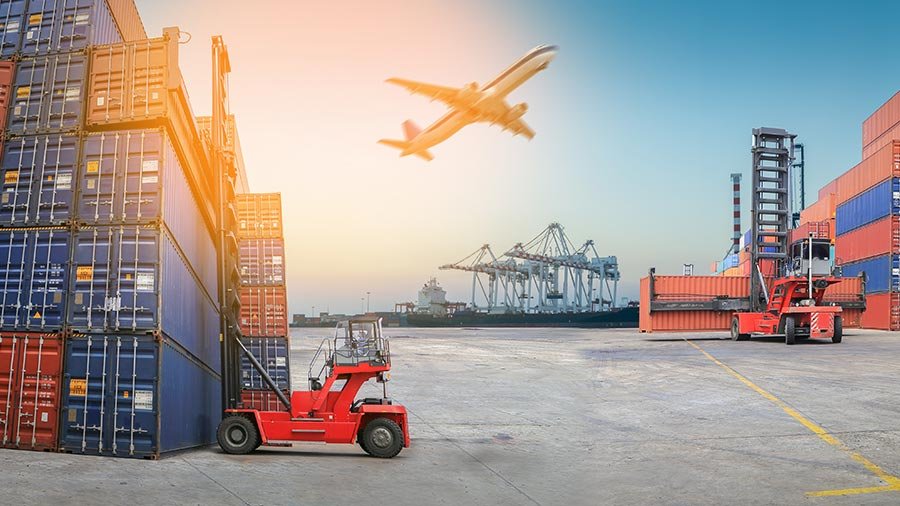
[vc_row][vc_column][vc_row_inner][vc_column_inner][vc_column_text]Freight forwarding refers to the process of organizing and coordinating the shipment of goods from one place to another on behalf of a client. A freight forwarder is a third-party logistics provider that acts as an intermediary between the shipper and various transportation services, including air, sea, and ground carriers.
Freight forwarding services typically include managing documentation, arranging for the transportation of goods, and handling customs and other regulatory requirements. The freight forwarder may also offer additional services, including cargo insurance, warehousing, and distribution.
Primary Goal
The primary goal of freight forwarding is to ensure that goods are transported from one location to another in a safe, timely, and cost-effective manner. Freight forwarders play a vital role in the global economy by facilitating trade and commerce between countries and regions.[/vc_column_text][/vc_column_inner][/vc_row_inner][vc_row_inner][vc_column_inner][vc_custom_heading text=”Role of freight forwarder” font_container=”tag:h3|font_size:25px|text_align:left|color:%231c5fa8″ use_theme_fonts=”yes” text_transform=”text-capitalize” font_weight=”600″][vc_column_text]The role of a freight forwarder is to act as an intermediary between shippers and various transportation services, such as air, sea, or ground carriers, to ensure that goods are transported from one location to another in a safe, timely, and cost-effective manner. Here are some of the specific responsibilities of a freight forwarder:
Overall, the freight forwarder plays a critical role in ensuring that goods are transported efficiently and effectively, with all necessary documentation and regulatory requirements in place.[/vc_column_text][/vc_column_inner][/vc_row_inner][vc_row_inner][vc_column_inner][vc_custom_heading text=”Process of freight forwarding” font_container=”tag:h3|font_size:25px|text_align:left|color:%231c5fa8″ use_theme_fonts=”yes” text_transform=”text-capitalize” font_weight=”600″][vc_column_text]Freight forwarding is the process of organizing the shipment and transportation of goods from one place to another. The process of freight forwarding typically involves the following steps:
Throughout the process, the freight forwarder provides regular updates to the customer on the status of the shipment, ensuring that the goods arrive at their destination on time and in good condition.[/vc_column_text][/vc_column_inner][/vc_row_inner][vc_row_inner][vc_column_inner][vc_custom_heading text=”FAQs” font_container=”tag:h3|font_size:25px|text_align:center|color:%231c5fa8|line_height:16px” use_theme_fonts=”yes” font_weight=”600″ css=”.vc_custom_1674123445454{padding-top: 10px !important;padding-bottom: 10px !important;}”][vc_toggle title=”Q1: What is freight forwarding?”]Ans: Freight forwarding is a service that helps move goods from one place to another. A freight forwarder handles transport planning, paperwork, customs clearance, and delivery, making shipping simple and smooth for businesses.
[/vc_toggle][vc_toggle title=”Q2: What does a freight forwarder do?”]Ans: A freight forwarder manages the full shipping process, including booking transport, handling documents, customs clearance, and ensuring your goods reach the destination safely and on time.[/vc_toggle][vc_toggle title=”Q3: How much does freight forwarding cost?”]Ans: Costs depend on cargo size, weight, destination, transport mode, and customs duties. A good freight forwarder gives clear pricing with no hidden charges.[/vc_toggle][vc_toggle title=”Q4: What are the advantages of land freight?”]Ans: Some advantages of land freight include: its flexibility, as trucks and trains can travel to most destinations, making it easy to ship goods to remote or hard-to-reach locations. Additionally, since land freight is not subject to the same weather conditions as ocean or air freight, it is often considered more reliable.[/vc_toggle][vc_toggle title=”Q5: What are the disadvantages of land freight?”]Ans: Some disadvantages of land freight include: the transit time can be longer than other shipping methods, especially if the destination is far away or in a remote location. Additionally, since land freight is dependent on road conditions, shipments can be delayed or even cancelled due to traffic, accidents or natural disasters.[/vc_toggle][vc_toggle title=”Q6: How can I track my goods during land freight?”]Ans: Most land freight carriers use GPS and electronic logging devices to track the location of their vehicles, which allows shippers to monitor the progress of their shipments in real-time.[/vc_toggle][vc_toggle title=”Q7: What should I do if my goods are delayed during land freight?”]Ans: If your goods are delayed during land freight, you can contact the carrier or logistics provider for more information. They may be able to give you an estimated time of arrival or provide information on the cause of the delay.[/vc_toggle][vc_toggle title=”Q8: What is the difference between trucking and rail freight?”]Ans: Trucking is the transportation of goods by road, while rail freight is the transportation of goods by train. Trucking is more flexible and can reach destinations that rail cannot, but rail is usually cheaper and more efficient for long-distance and heavy freight.[/vc_toggle][vc_toggle title=”Q9: Can I insure my goods during land freight?”]Ans: Yes, you can insure your goods during land freight. Most freight carriers and logistics providers offer insurance options for their services. It’s important to review the carrier’s insurance policy and to make sure that the coverage meets your needs.[/vc_toggle][/vc_column_inner][/vc_row_inner][/vc_column][/vc_row]